Washington Hayes (also known as “Wash Hayes,” “George Washington Saunders,” or “Washington Saunders”) was born around 1824 to Glasgow Saunders and Charlotte Hayes. Born George Washington Saunders while enslaved, he is described by this name in the commissioners report detailing the laborers who built the Capitol. He later began using his mother Charlotte’s last name “Hayes” after emancipation. While still enslaved, he united with his first wife, Laura Hayes, probably sometime around 1854. They had eight known children prior to her probable death about 1875. In 1877, Washington married his second wife Nancy Hunter. They had six known children.
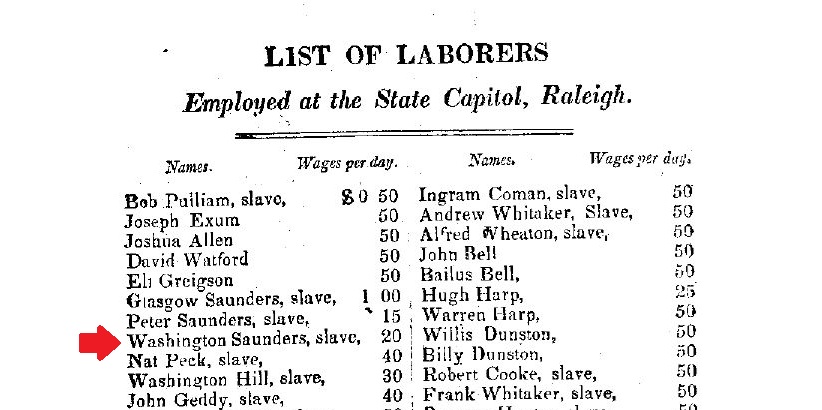
Glasgow Saunders and Washington are listed together on the 1834Report of the Commissioners appointed to superintend the re-building of the State Capitol. Glasgow was highly paid for this project; his labor was valued at $1.00 per day, double what the labor of most of the enslaved men generated. Peter Saunders and Washington Saunders, listed just below Glasgow, were compensated significantly less, only 15 and 20 cents respectively. Washington’s lower compensation makes sense – he was a child, likely working alongside his father Glasgow. (For more on Glasgow Saunders)
"Washington Saunders" is shown here in the 1834 Commissioner’s Report.
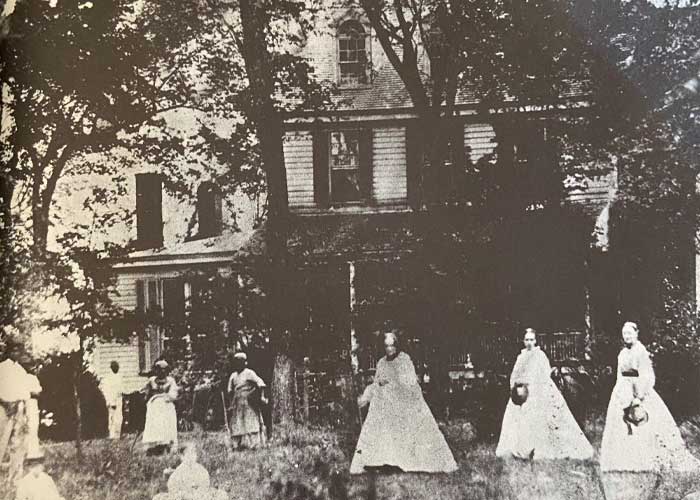
Washington was likely enslaved as a child by Romulus Saunders. Romulus was a member of North Carolina’s legislature, a Congressman, and one of the appointed commissioners on the Capitol’s construction project. Romulus’s daughter, Nancy, is recorded signing to pick up Peter Saunders’s wages when she herself was 10 years old. It’s possible that Romulus gave enslaved people to his daughter. (For more on the topic of Women Enslavers) Romulus Saunders’s Raleigh home was Elmwood, a house located off Hillsborough Street a few blocks west of the Capitol. Elmwood was purchased by Romulus Saunders in the early 1830s after he rented the home for a time. The 1830 census showed ten people residing in the home of Romulus Saunders in Wake County and also noted fifteen enslaved people in his household – it’s likely Washington was one of these people.
This image shows Elmwood and its residents in 1867. Pictured are members of the white Saunders family and Black individuals employed by the family at the time. The people in the photograph are (right to left): Margaret Saunders L’Engle, Julia Saunders Slayton, Anna Johnson Saunders (wife of Romulus Saunders), Lisa L’Engle, William L’Engle, Margaret (a maid), Mom Patsie (a cook), Macy (the butler), Robert (the coachman), and Harp (the yardman). Romulus Saunders is supposedly sitting on the porch in this photo.
These two images show the census line from 1830 noting that Romulus Saunders had 25 people total in his household in Wake County - 10 white family members and 15 enslaved people.
Though much is unknown about Washington’s early life under slavery, he survived to Emancipation and stayed in Raleigh. A skilled laborer, Washington worked as a stone mason throughout Raleigh, and the 1870 census records him as a “brick mason.” The census also shows Washington living in a household with his wife Laura (age 40), daughters Charlotte (15), Serena (13), and sons Alston (10), Washington (7), and Alexander (2).
The 1870 census lists Washington as a "Brick Mason."
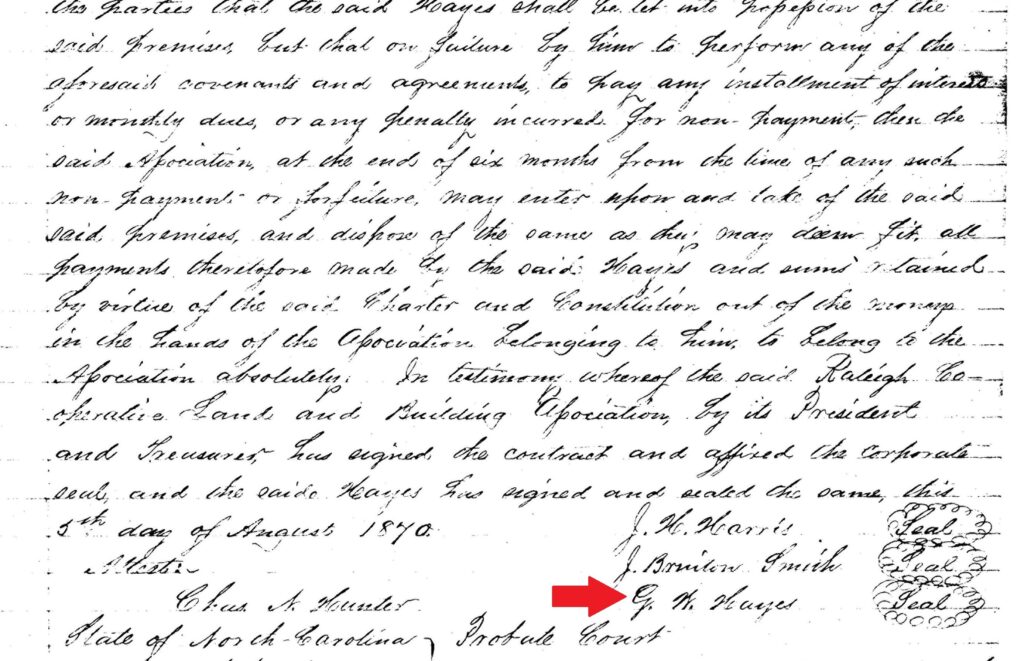
They are noted as living next door to Charlotte Hayes, age 75 – Washington’s mother. They are also noted living next door to Annie Saunders, the widow of Washington’s enslaver, Romulus. In 1870, Washington purchased land in the 800 block of East Hargett Street. He was a member of the Raleigh Land and Building Association, as chartered by local Black politician James Henry Harris. The Raleigh Land and Building Association was a loan cooperative designed to make housing affordable for people across the economic spectrum in Raleigh. Washington was likely able to purchase land because of his participation in this organization.
This deed shows Washington's purchase on the 800 block of East Hargett Street.
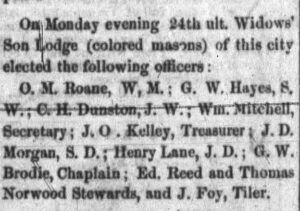
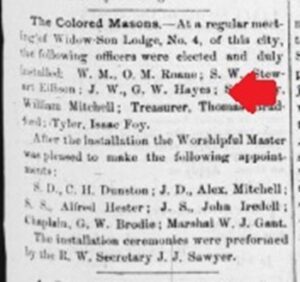
These two articles describe Washington's promotion to leadership roles within the Free Masons.
Washington worked to serve the Raleigh community through charitable work for much of his later life. Beginning in 1871, he held leadership positions in Raleigh’s first group of “Colored” Free Masons – Widows’ Lodge #4. Washington was appointed as the “Junior Warden” (essentially third in command), and in 1872, he was appointed as “Senior Warden” (second in command).
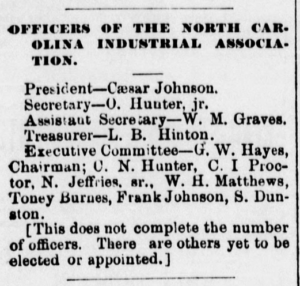
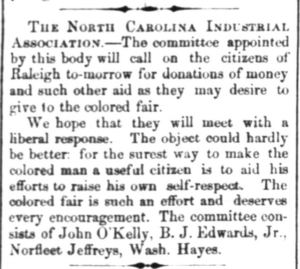
In addition to his community work with the Free Masons, Washington was an active leader with the NC Industrial Association Fair.The NCIA Fair (known as the Industrial Fair and usually referred to as the “Colored Fair”) was held every year for almost fifty years. North Carolina’s Governor typically opened the fair with a speech each year and other notable guest speakers included Frederick Douglass and Booker T. Washington. Washington Hayes was appointed chairman of the executive committee in 1879.
These articles show the leadership roles Washington held in the planning committee for the NCIA fair, and consequently the depth of his community involvement.
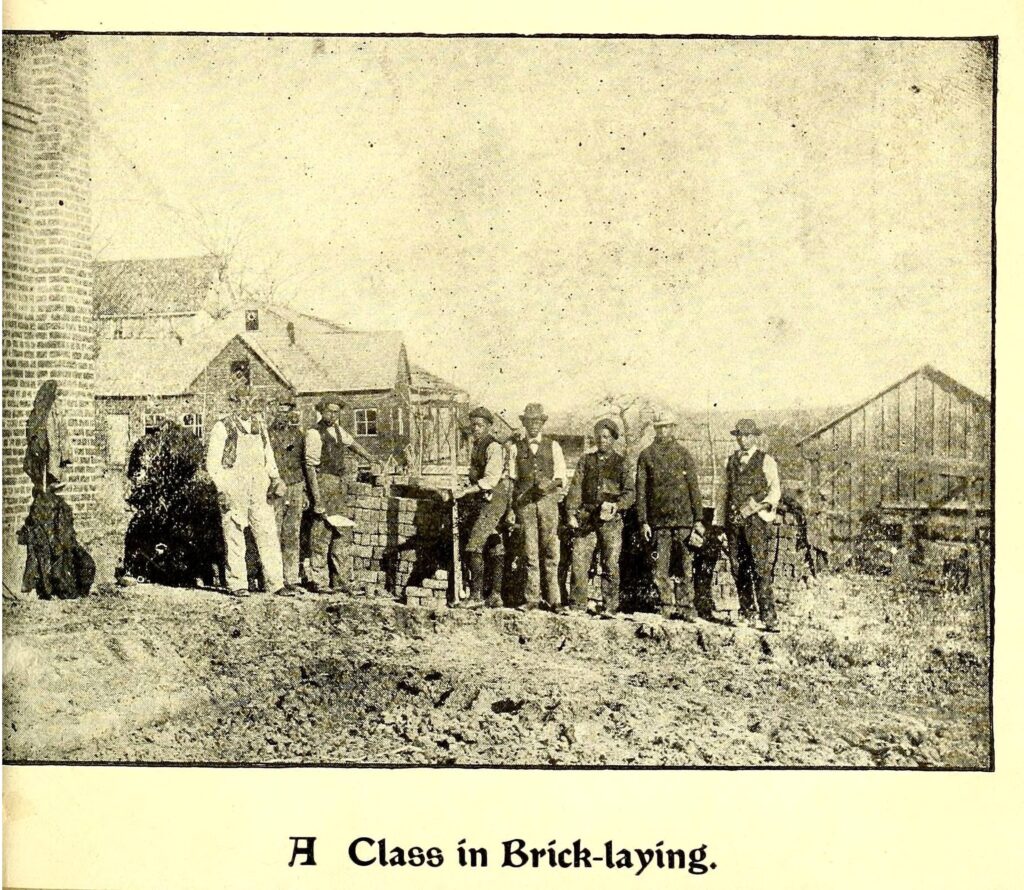
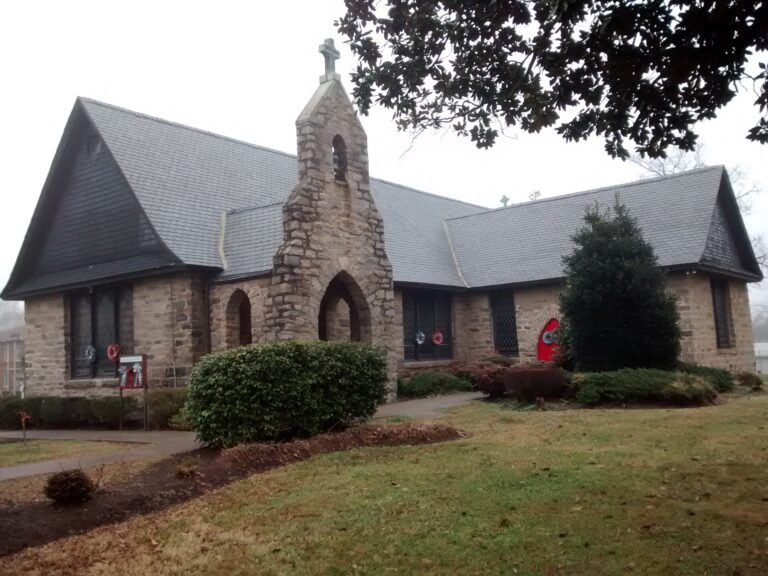
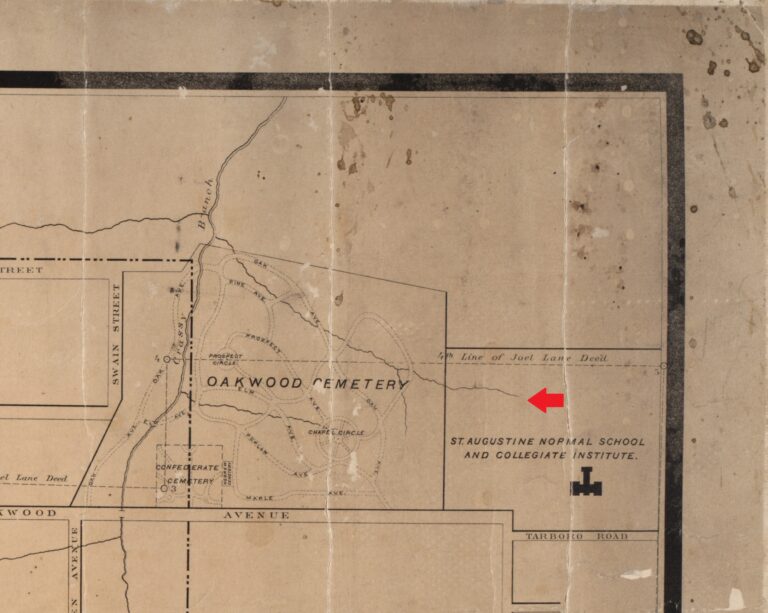
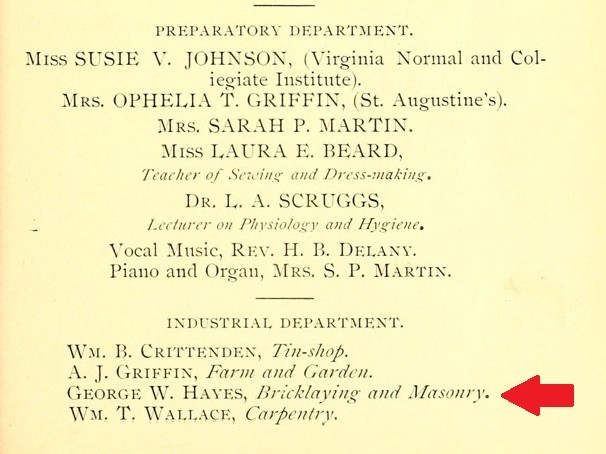
All his life, Washington was a trained and skilled mason. He worked with both brick and stone, and applied his knowledge to lead parts of the construction of Saint Ambrose Church and Benson Library on the Saint Augustine University campus. Washington was integral to the construction of campus building from the beginning. “The corner stone of the Chapel was laid on July 15th, 1895 in the presence of some 94 persons. The stone for the foundation was taken from the grove near the spring on the school ground…” Washington’s efforts were memorialized within the church: “When the pulpit was erected in the chapel it was made a memorial for Mr. Washington Hayes, a communicant in the church who had led the masons in their work.” When working on the chapel at Saint Augustine’s, Washington also served as faculty for the school.
Brick laying class at Saint Augustine’s 1899-1900. Photo likely contains Washington Hayes
Image of the chapel Washington helped erect.
This map from 1888 shows possible origin of Saint Augustine Chapel cornerstone
Faculty List from the Saint Augustines Yearbook.
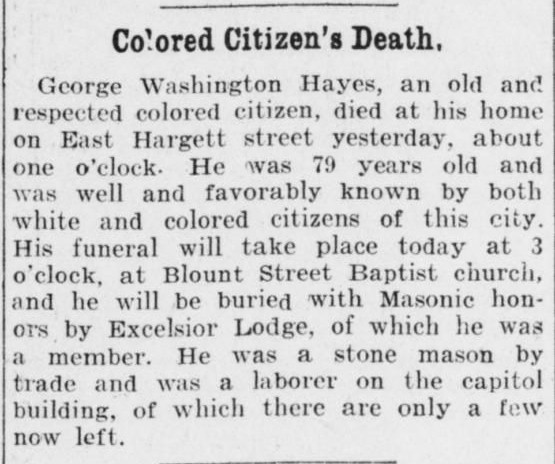
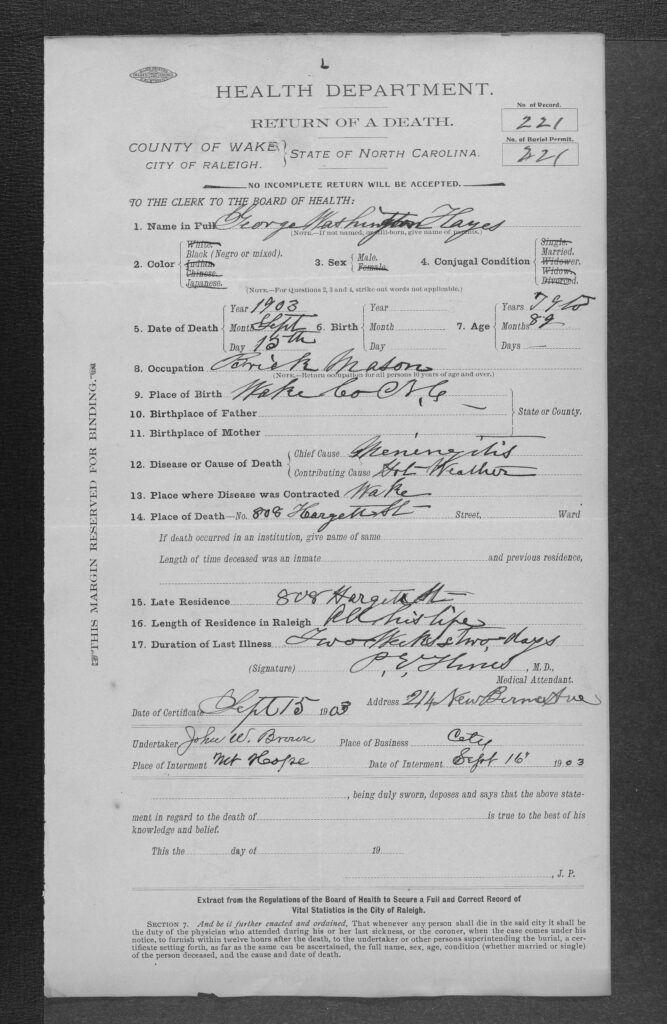
Washington Hayes died in Raleigh, September 15, 1903 when he was 79 years old. His cause of death was listed as “meningitis.” In 1910, his widow Nancy built a house across the street from the house Washington purchased. She lived there until her death, and the house was deeded to Saint Augustine’s College in the 1970s.
Washington’s obituary describes snippets from his life of community service, and even mentions his childhood involvement with the Capitol’s construction.
Washington’s death certificate not only shows the brevity of his period of illness before he lost his life to meningitis, but also highlights some of the biographical gaps that exist in the records of formerly enslaved people. Place of birth for both his mother and father was left blank.
A very special thank you to Michelle Mack and Alan Welsh for all their work putting together Washington’s story.
References:
Census Of The United States, 1830-80, Record Group: Records of the Bureau of the Census, The National Archive, Washington, D.C.
“Elmwood,” Elizabeth Reid Murray Collection, Agriculture and Environment, 1800-2004, Olivia Raney Local History Library Repository, Wake County Public Libraries.